The carver behind the carved
From the workshop in Hornindal in Nordfjord, in the municipality of Volda on Norway's west coast, a noble art and a venerable craft reach out across the world: baroque and rococo, acanthus and dragon, figurative work, relief and portrait. All drawn by hand and cut by hand — the way the best is made.
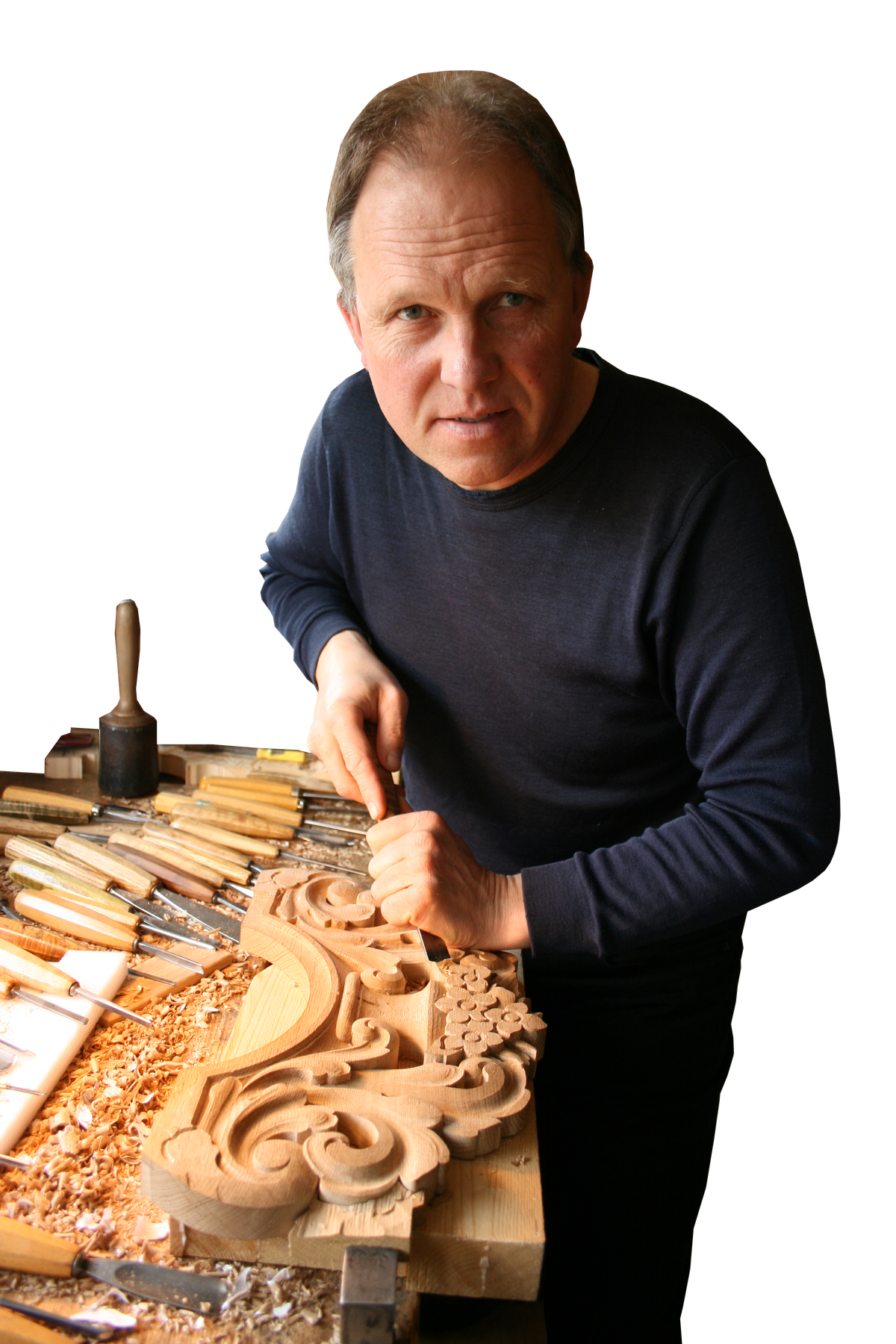
Rolf Taraldset
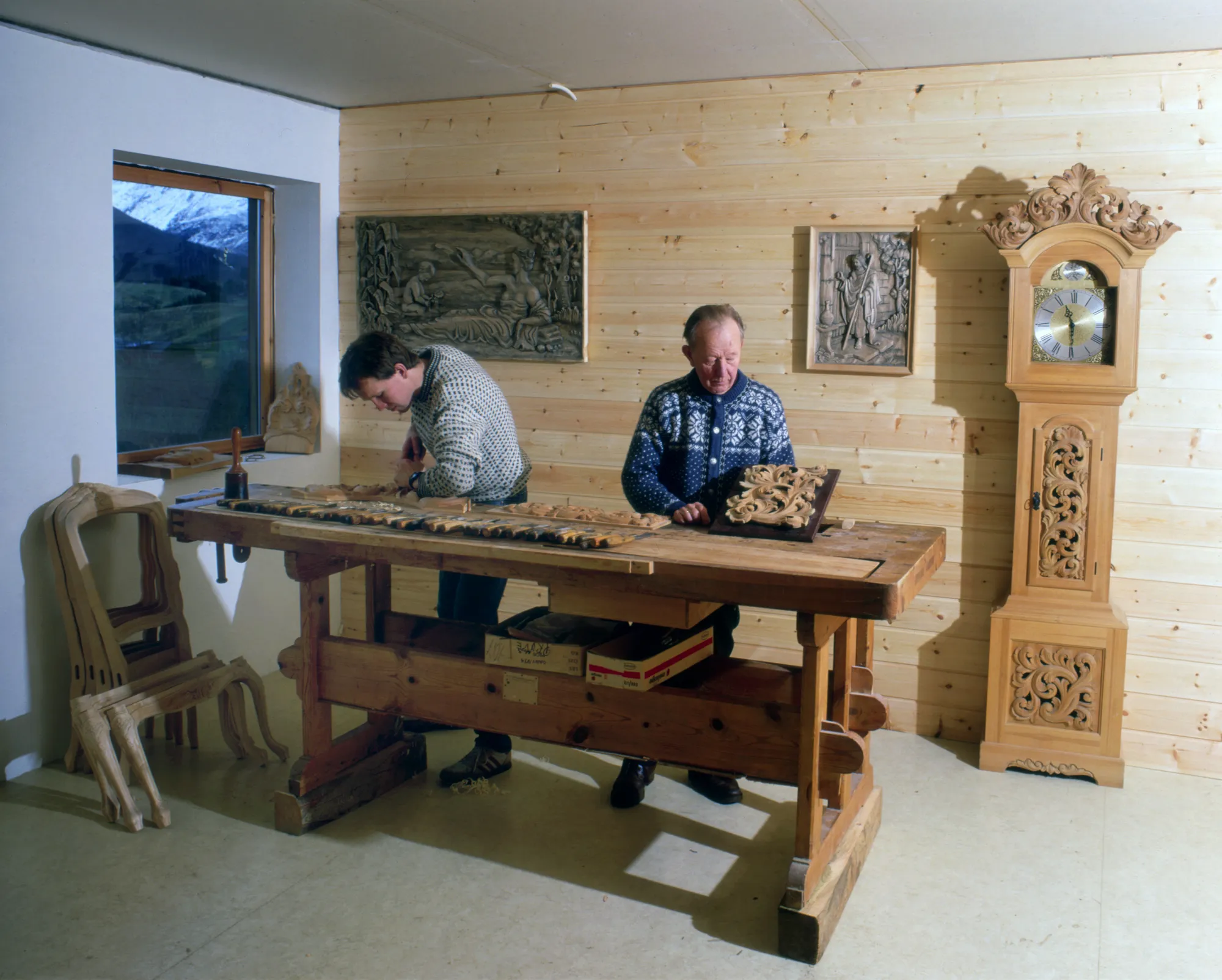
Rolf was born and raised in Hornindal. The first cuts were made at the age of five, in the workshop of his father, Bjarne, who was himself a professional carver and had apprenticed with Daniel Hagerup, a sculptor trained in Oberammergau. Three years in the workshop at home led on to the Hjerleid school of woodcarving at Dovre, the principal seat of the trade in the country: a journeyman’s certificate in 1976, and later the master’s.
The whole process is done by hand in the carving workshop on the forest property at Taraldset in Hornindal, by Hornindalsvatnet, the deepest lake in Europe. Every step happens there: from sketch, pattern and the choice of blank to carving and the final finish. The aim lies closer to the authentic than to ornament: a relief that draws you in, a figure that seems about to step out of the wood.
The first course was taught the same year the journeyman’s certificate came, in the student years at Dovre. Since then around fifteen hundred students have taken part in carving courses across Norway and Scandinavia and in the United States, among them Vesterheim, the Norwegian-American Museum in Decorah, Iowa. Every summer the workshop at Taraldset is shared: where the commissions are carved the rest of the year, course participants sit with models drawn for them, and many come back year after year. The same craft is put to the test when new journeymen sit for their certificate: Rolf leads the examination board and sits on the national curriculum committees and the Directorate for Education’s examination committee.
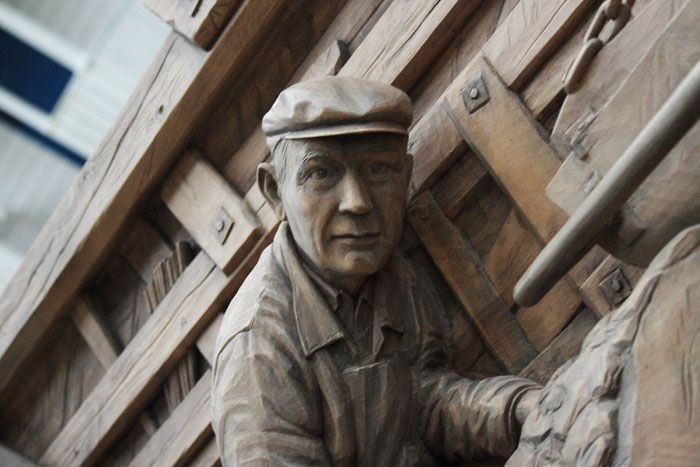
The work spans all the classic styles: baroque, rococo, acanthus, dragestil; portrait, deep relief and sculpture, and furniture in baroque and rococo. In scale it runs from small models for casting to large decorations, ornamental or figurative. The classical is the very foundation of the craft: it has to sit in the hands and the spine — and once it does, that foundation flows easily into whatever it is applied to.