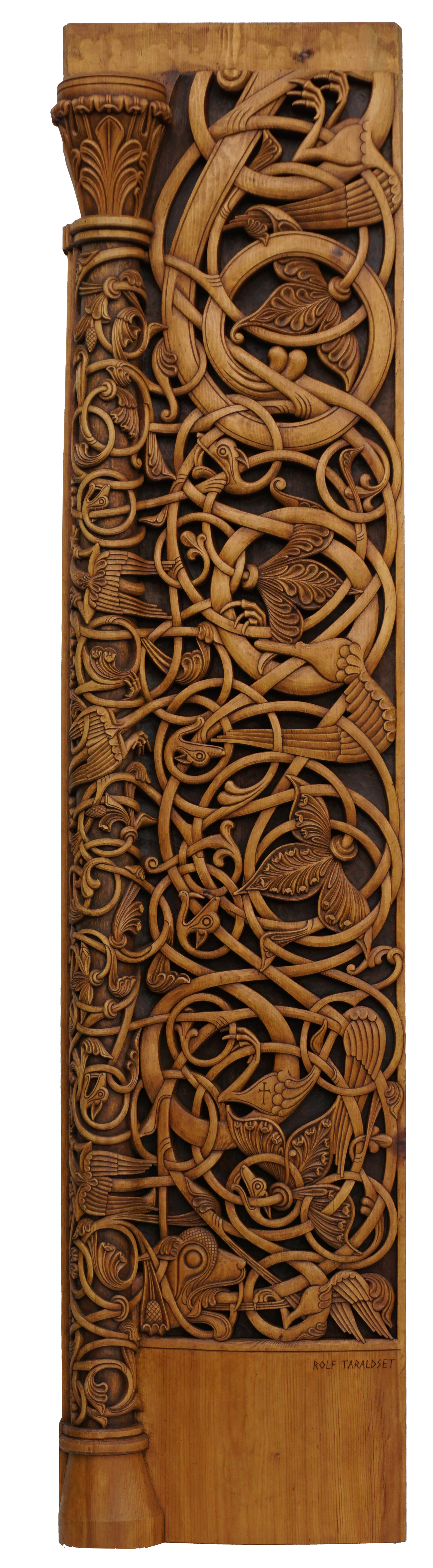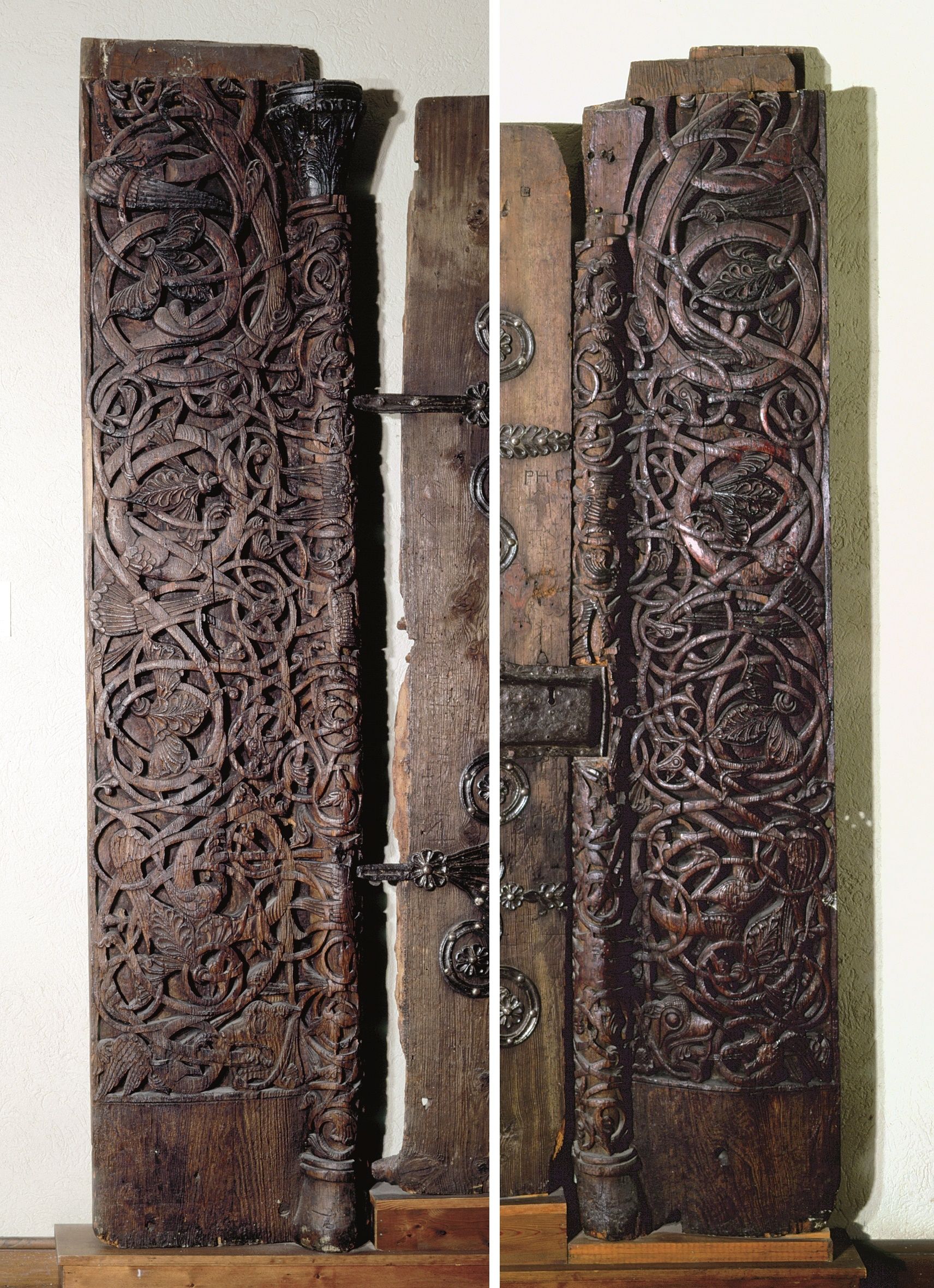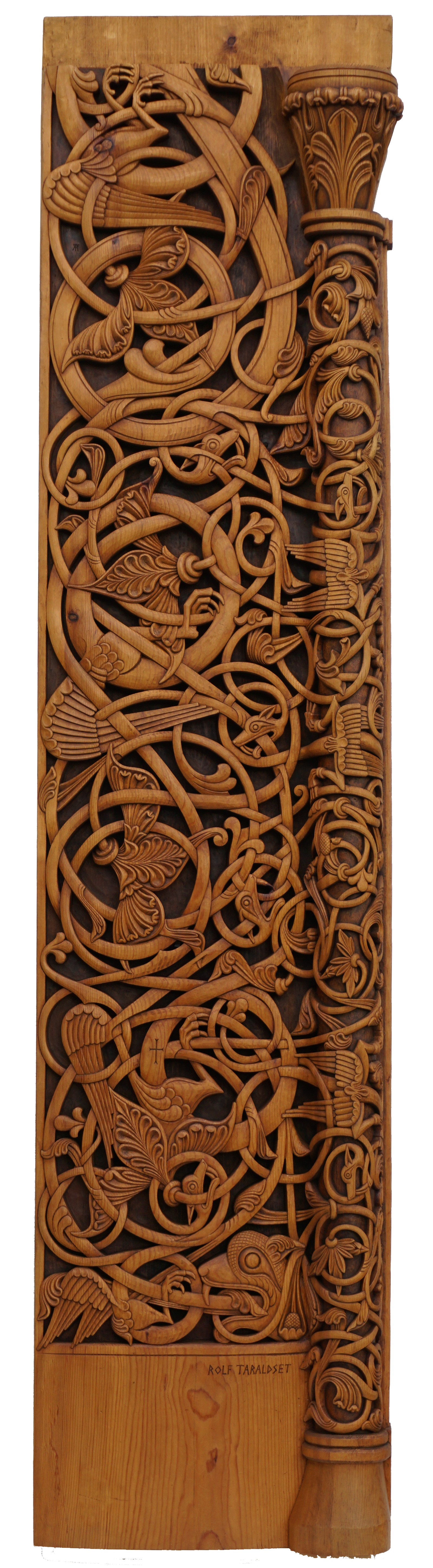
The Ulvik portal is one of the foremost carved portals of the Norwegian Middle Ages — made around the year 1150 for the old stave church at Ulvik in Hardanger. This is Rolf Taraldset's reconstruction of it, carved anew in two parts from whole lengths of heartwood pine, the same timber as the original. Each side weighs close to a hundred kilos. It is no secret that this was a demanding piece — or pair — of work, which grew over several years.
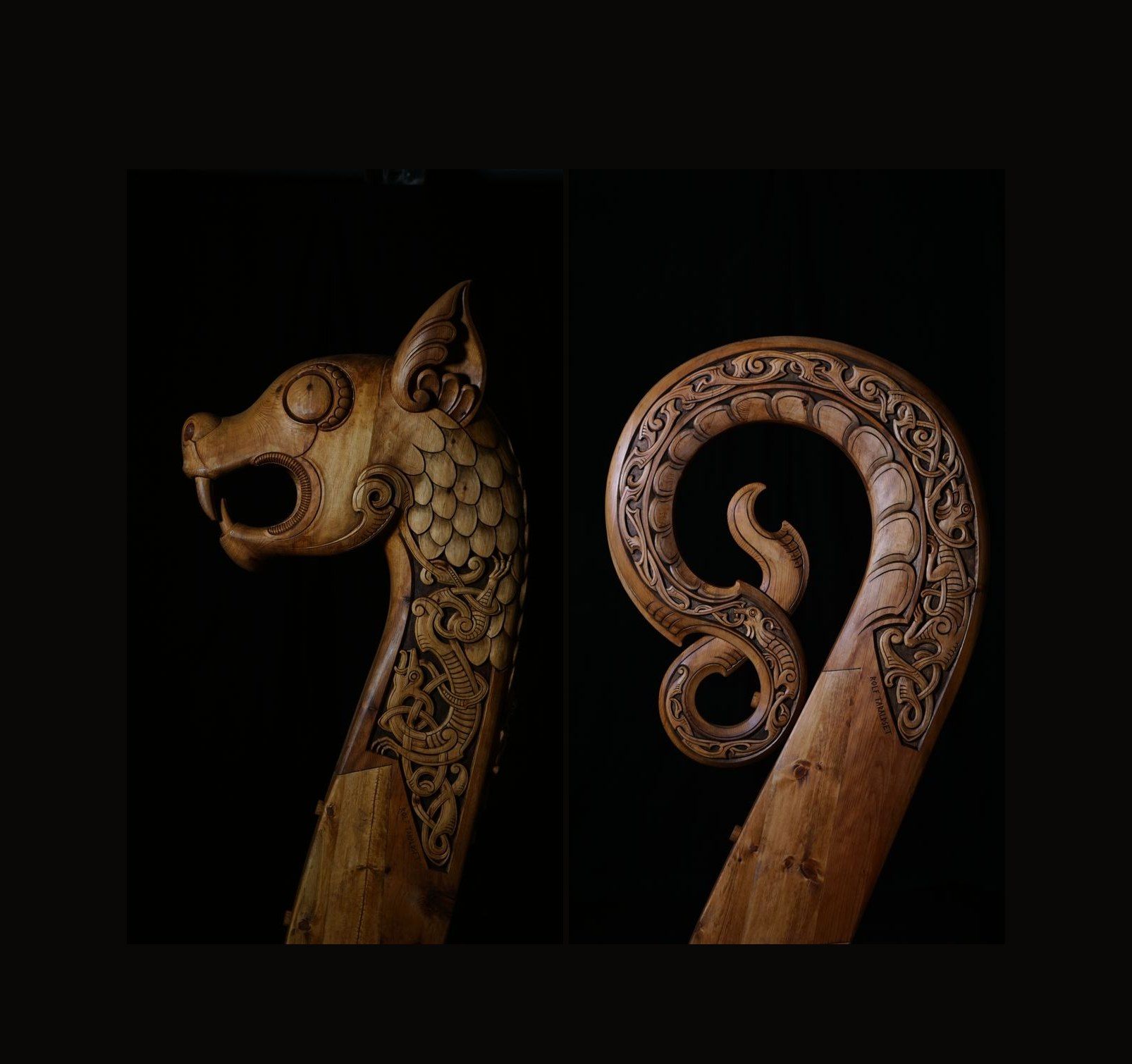
It is striking what the carvers achieved in their time: more than one hand worked it, and the original's quality shifts from part to part, yet the whole is the work of real mastery. To reach where they reached, Rolf had to make new tools of his own.
It's not copywork, it's a reconstruction. In places the pattern on the original is worn thin or gone, and the carving bears the scars of later use besides — not everything is given. What is missing has to be reasoned back from what survives: by reading the portal's own expression, the way its forms repeat and answer one another, and with the understanding and the eye it takes to make the harmony come together. Drawn and redrawn until the line finds its way home. What stands here is more than 850 years deep in its roots, yet also something wholly new — living, and its own. The portal has found its resurrection and a new life in a new work.
In the end the surface wakes the carving. The relief runs deep — in places very deep — so that in low, raking light the whole portal stirs with shadow. Wood oil, and a darker oil laid into the ground, draw the depths forward so that light and shadow fall where they belong, until the work stands as close to the original as it can come. It can be seen at Bryggen Husflid in Bergen.